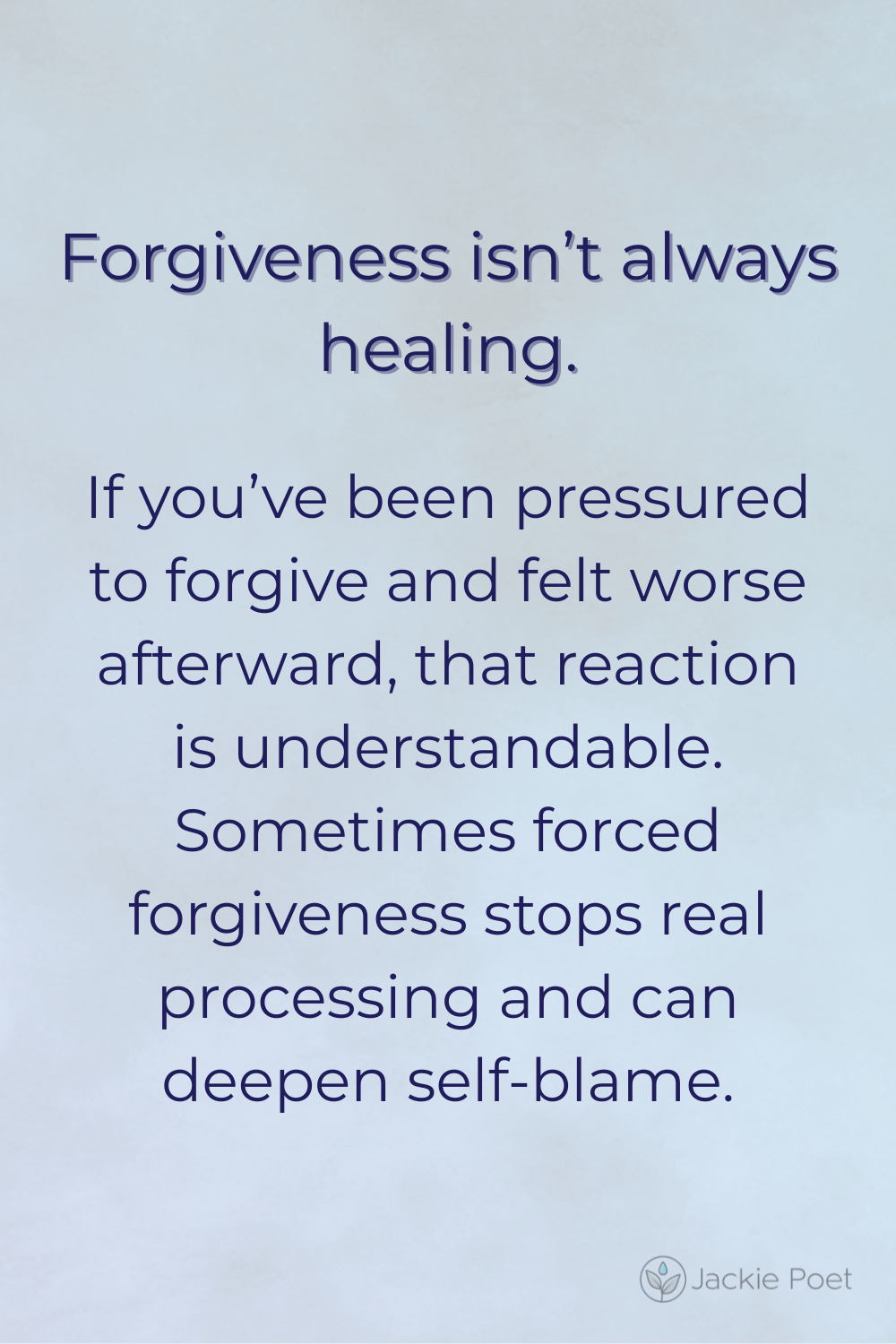
Forgiveness is often presented as the ultimate goal of healing, yet there are risks when it is rushed or forced.
If you’ve tried to forgive but felt worse afterward, or if you feel guilty for not being “ready,” these feelings make complete sense.
Forgiveness is not always the healing tool it is made out to be.
When forgiveness comes too early, it can prevent you from fully processing what happened.
You need time to acknowledge that what occurred was wrong, to feel the emotions, and to grieve what you deserved but never received.
Skipping these steps in order to “forgive and move on” can slow real recovery.
Sometimes forgiveness becomes a form of denial, a way to avoid the painful truth that those who should have protected you were the ones who caused harm.
It can also increase self-blame.
When accountability disappears, you may start to wonder what you did to deserve the abuse.
There is also the risk that forgiving without accountability allows harmful patterns to continue.
Without consequences, cycles of dysfunction can repeat within families or relationships.
Your anger is valid and often protective.
It shows that you deserved better and helps you set healthy boundaries.
Anger does not mean you are bitter or stuck, it means you are human.
You do not owe forgiveness to anyone, and you do not need to forgive to heal.
If forgiveness ever feels right, it will come naturally, on your own timeline.
Trust yourself to know what you need.
Your healing journey is valid, whatever form it takes.
Continue your healing journey with Toxic by Jackie Poet a compassionate guide to understanding and overcoming the lasting effects of childhood trauma.