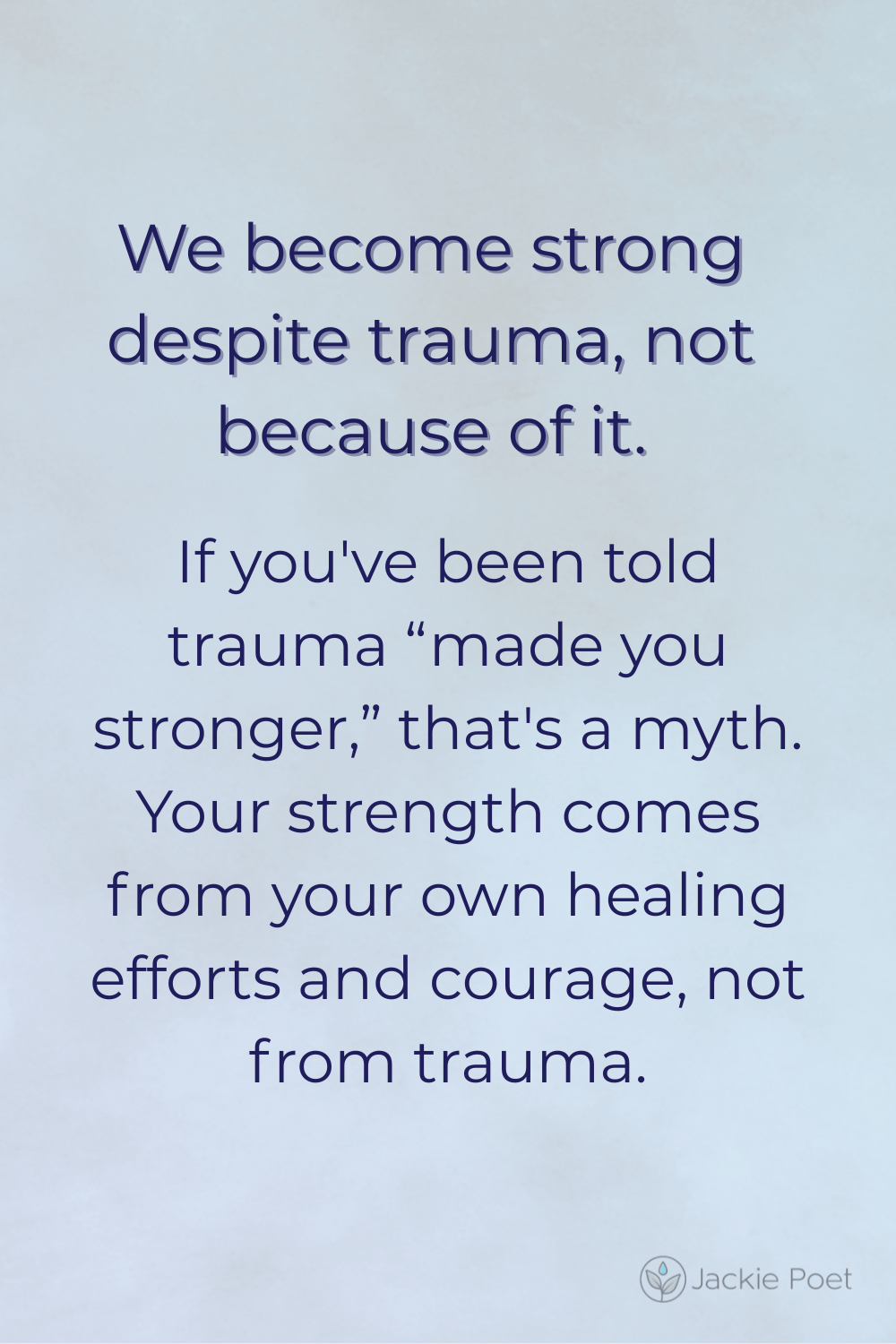
If you’ve been told that trauma “made you stronger” or that you should somehow be grateful for what you endured, please know that this is a harmful myth that needs to be challenged.
The idea that “whatever doesn’t kill you makes you stronger” is often promoted in books about trauma and resilience, but it’s not supported by evidence. If trauma really made people stronger and more successful, then trauma survivors as a group should dominate universities, top jobs in government and business, and excel in sports and the arts.
But research shows the opposite is true. The ACE study has demonstrated the negative effects of childhood trauma on later-life health and well-being. The more trauma experienced in childhood, the higher the likelihood of facing health and social problems as adults. This isn’t because trauma survivors are weak; it’s because trauma causes real, measurable damage that requires healing.
When people focus on successful individuals who experienced trauma, they’re falling into what’s called “survivorship bias”: highlighting those who overcame their trauma while ignoring the countless others who continue to struggle. Some people do achieve great things despite experiencing trauma, but their success happened in spite of the trauma, not because of it.
Your strength and resilience don’t come from the trauma itself. They come from your own efforts to heal, learn, and grow. They come from therapy, self-reflection, and the hard work you’ve put into understanding yourself and building a better life. They come from your courage to face difficult truths and your determination to break cycles of dysfunction.
You never needed to suffer to become worthy of success, love, or respect. You didn’t need trauma to build character or teach you important lessons. You could have learned those same lessons and developed that same strength in a loving, supportive environment, and you would have been better off for it.
There’s nothing beneficial about trauma. While you can absolutely grow stronger and more resilient after experiencing trauma, this growth is your achievement, not trauma’s gift. You deserve recognition for the incredible work you’ve done to heal and thrive, not pressure to be grateful for the experiences that hurt you.
Your pain was real, your trauma was harmful, and your healing journey is something to be proud of. You don’t owe anyone gratitude for your suffering.
Continue your healing journey with Toxic by Jackie Poet a compassionate guide to understanding and overcoming the lasting effects of childhood trauma.