
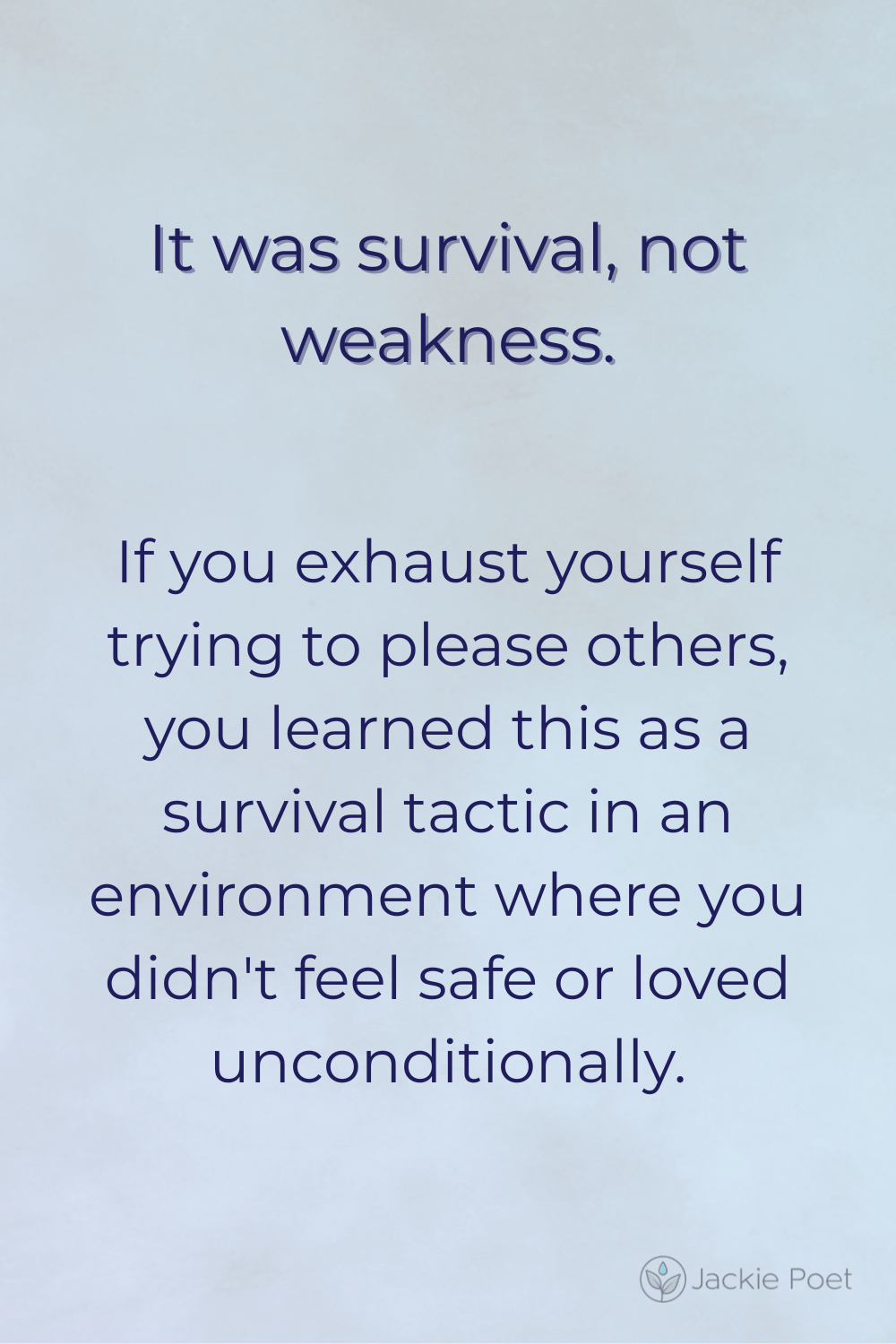
If you exhaust yourself trying to keep everyone happy and avoid conflict, you are not flawed.
These patterns are survival strategies you developed as a child.
People-pleasing (the art of anticipating the needs and moods of others to avoid conflict or rejection) begins as protection.
When home feels unpredictable, a child learns to watch every mood, anticipate every need, and stay agreeable.
By smoothing conflict and putting others first, you could create small moments of peace or win brief approval from the adults who were supposed to care for you.
That hyper-awareness of other people’s reactions and the instinct to say yes when you want to say no once kept you safe.
They made sense in a world where your needs were not a priority.
You were not born this way.
You learned it because you had to.
These patterns are not flaws of character.
They are evidence of your resourcefulness and your will to survive.
As adults, the same habits can become exhausting.
Always monitoring, always agreeing, always working to keep the peace leaves little room for your own needs or for relationships built on honesty and mutual respect.
Recognizing the origins of people-pleasing does not make the pattern disappear overnight, but it changes how you see yourself.
You can approach these habits with compassion instead of criticism.
You can begin to practice small shifts: pausing before you answer, noticing what you truly want, allowing yourself to say a gentle no.
Each small step is an act of healing.
Your childhood strategies helped you survive.
Now your healing can help you live, free to care for others without losing yourself, and free to care for yourself without guilt.
Continue your healing journey with Toxic by Jackie Poet a compassionate guide to understanding and overcoming the lasting effects of childhood trauma.