
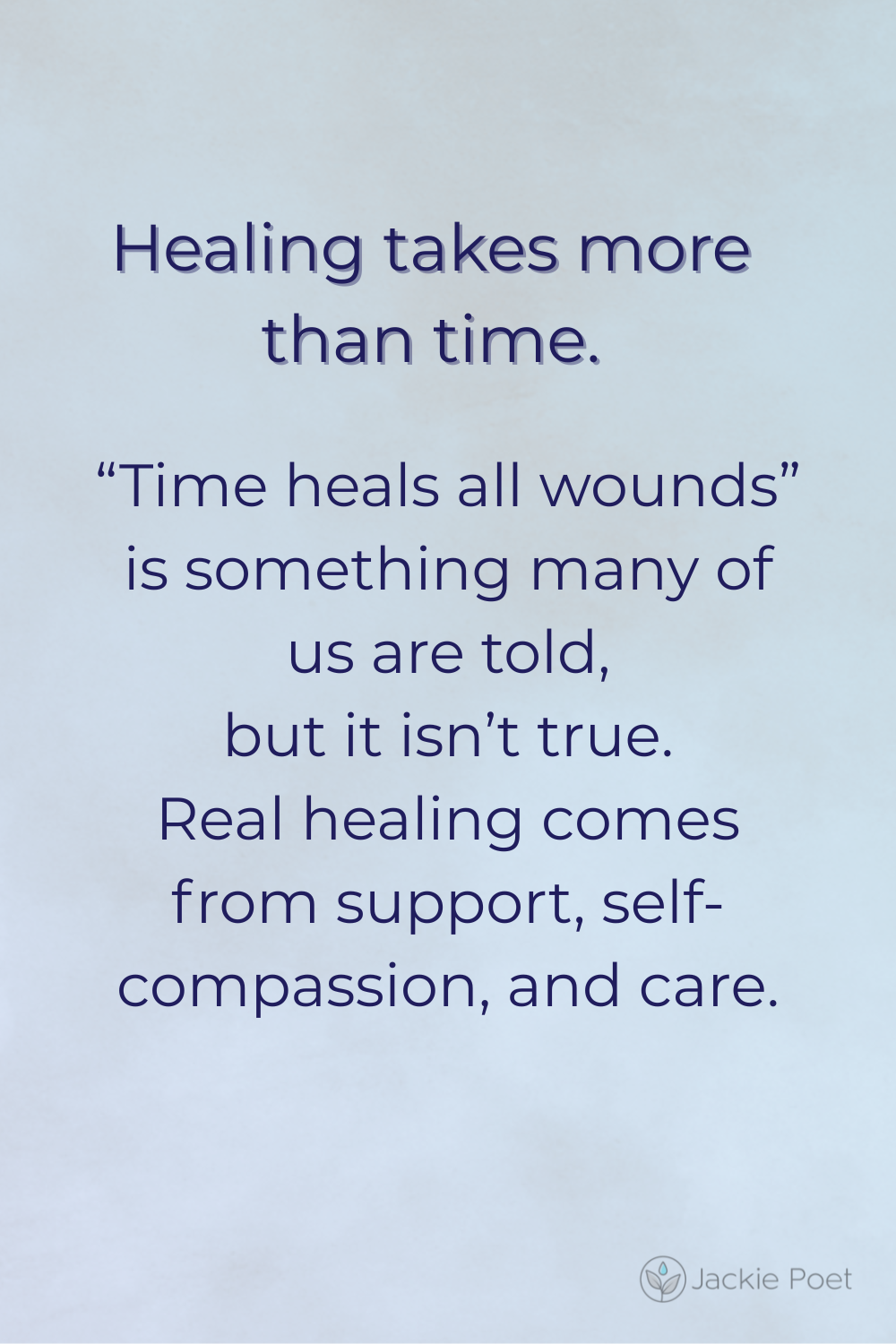
If you’ve been told “time heals all wounds” or made to feel like you should be “over it by now,” please know that this is one of the most harmful myths told to trauma survivors.
If time really healed trauma, we wouldn’t need therapy, self-reflection, support groups, or any healing work. We would just need to wait it out until enough time has passed. But that’s not how trauma works; our brains and bodies hold onto traumatic experiences, and without active intervention, these experiences continue to affect us.
There is a real danger in the “time is a healer” idea. It stops us from seeking support when we need it most. It makes us believe we should be able to heal passively, just by waiting long enough. This myth also allows others to avoid taking responsibility for the harm they caused by suggesting we should be “over it” by now.
The truth is that sometimes time can actually hurt us more if we don’t get the support we deserve. Isolation, avoidance, and hoping things will magically improve can make trauma symptoms worse over time. Without proper support, we may continue using coping strategies that served us as children but no longer serve us as adults.
Real healing requires intentional action. This might mean therapy, support groups, self-reflection, learning about trauma and its effects, and developing healthy coping mechanisms. It means actively processing what happened to us rather than just hoping time will make it fade away.
Time is not a healer. We heal ourselves through the conscious steps we take toward recovery, the support we seek, and the work we do to understand our past and build a better future. You’re not “taking too long” to heal, and you’re not “stuck in the past.” You’re doing important, difficult work that takes time and deserves support.
You deserve more than just waiting and hoping. You deserve active, intentional healing support and all the time you need to work through your experiences at your own pace.
Continue your healing journey with Toxic by Jackie Poet a compassionate guide to understanding and overcoming the lasting effects of childhood trauma.


